
Overview:
Introduction
Ultratight
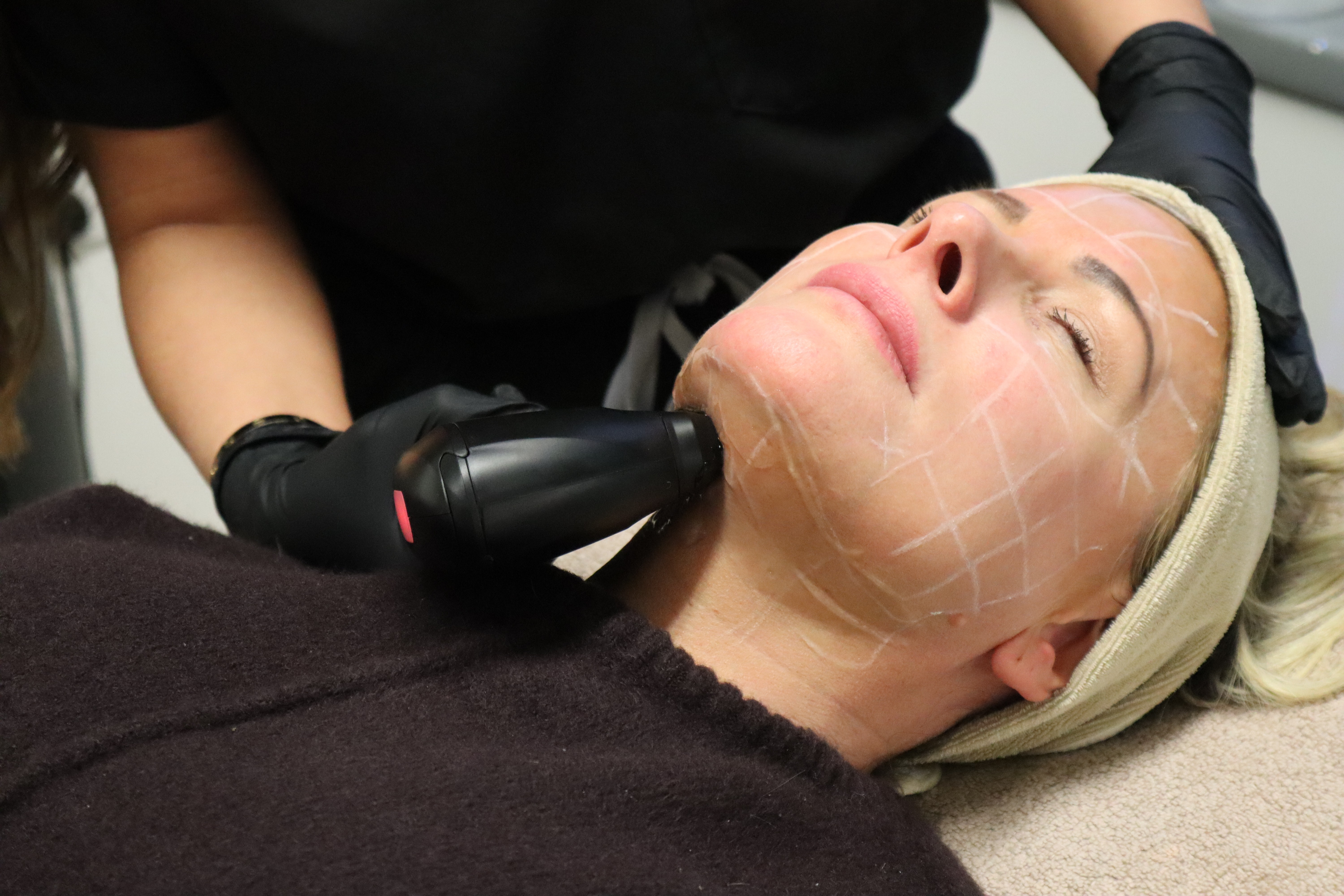
Ultratight is a non-invasive FDA cleared technology which uses Micro Focused Ultrasound (MFU) to tighten and lift skin. It delivers focused ultrasound energy to the skin’s underlying tissue, specifically targeting the SMAS (Superficial Musculoaponeurotic System) layer.
What is MFU?
The controlled heat generated by the ultrasound stimulates the body’s natural collagen production process, helping to tighten and lift the skin over time.
This treatment is very different to HIFU because there is minimal discomfort throughout the treatment and is more precise and focused.
Benefits
It is perfect for anyone suffering with the signs of aging targeting wrinkles, sagging jowls and sagging skin following weight loss. It can also give a brow lift.
Collagen and elastin proteins are the essential fibres that make up the connective tissues of our skin. They support the structure and foundation of the skin to maintain its elasticity and firmness which is lost with age.
How does it work?
The procedure uses a specialised applicator to transmit ultrasound energy to the same skin depths that cosmetic surgeons treat during surgical facelifts.
The ultrasound energy then heats up the skin tissues through thermocoagulation to stimulate new collagen and elastin proteins.
Treatment Areas
Full face and neck and decolletage, arms, abdomen, inner thighs and flanks.
Contraindications
Pregnancy or breastfeeding
Active skin infections, open wounds, or lesions in the treatment area
Implanted electrical devices (e.g., pacemaker, defibrillator)
Metal implants or plates in the treatment area
Dermal fillers or anti-wrinkle injections in the treatment area within the last 2–4 weeks (or as advised by practitioner)
Active cancer or undergoing cancer treatment
History of keloid scarring or poor wound healing
Autoimmune connective tissue disorders affecting the skin (e.g., lupus, scleroderma)
Uncontrolled diabetes
Epilepsy not medically controlled
Immediate and Common Side Effects
Skin may appear tightened and/or lifted
Redness may occur and typically resolves within a few hours
Mild swelling may occur and last for a few days
Tingling or tenderness to touch may last from a few days to several weeks.
Results
Results will continue to develop over three months.